

Hey there! As a supplier of PCB used EI transformers, I often get asked a bunch of questions. One of the most common ones is, "Do PCB used EI transformers generate heat?" Well, let's dive right into this topic and find out.
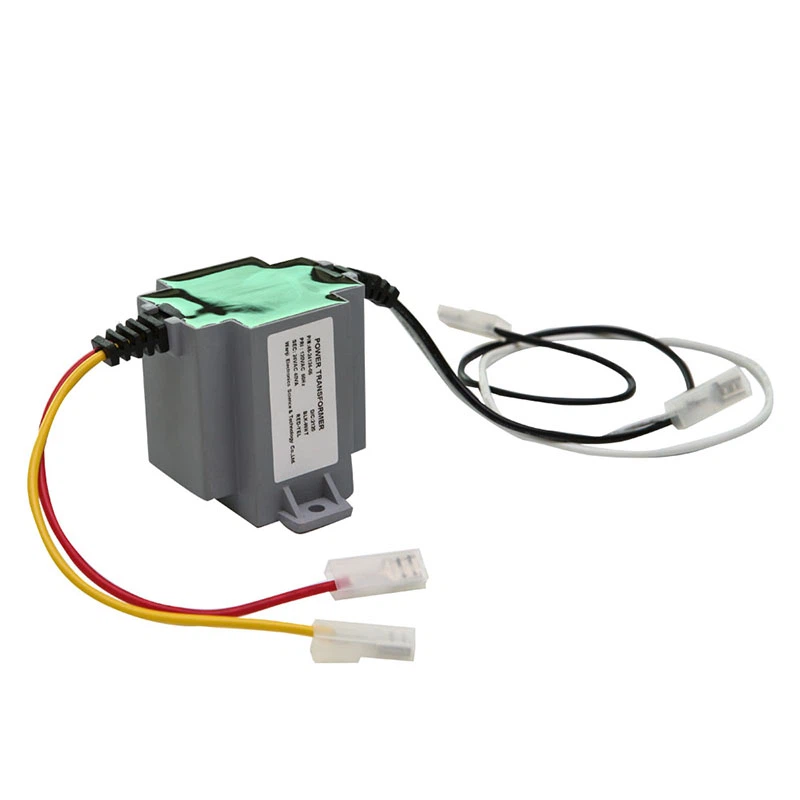
First off, let's understand what an EI transformer is. EI transformers are named after the shape of their core laminations, which look like the letters "E" and "I". These transformers are widely used in various applications, from power supplies in electronic devices to more specialized areas like door control systems and medical equipment. For instance, you can check out the El Transformer for Door ControlSystem, which is designed specifically for door control applications. And if you're in the medical field, the EI Medical Power Transformers are a great option.
Now, back to the question at hand: do these transformers generate heat? The short answer is yes, they do. But the amount of heat generated can vary depending on several factors.
One of the main reasons EI transformers generate heat is due to losses. There are two primary types of losses in a transformer: copper losses and core losses.
Copper losses occur in the windings of the transformer. When current flows through the copper wires, there is a resistance to the flow of electricity. According to Ohm's law (V = IR), this resistance causes a voltage drop and results in power being dissipated as heat. The amount of copper loss depends on the current flowing through the windings and the resistance of the wire. Thicker wires have lower resistance, which means less copper loss and less heat generation. However, using thicker wires can also increase the cost and size of the transformer.
Core losses, on the other hand, are related to the magnetic properties of the core material. The core of an EI transformer is made of a ferromagnetic material, usually a type of steel. When an alternating current passes through the primary winding, it creates a changing magnetic field in the core. This changing magnetic field causes the magnetic domains in the core material to constantly realign, which generates heat. Core losses can be further divided into hysteresis losses and eddy current losses.
Hysteresis losses occur because the magnetic domains in the core material do not realign instantaneously with the changing magnetic field. There is a lag, or hysteresis, in the magnetization and demagnetization process. This lag results in energy being dissipated as heat. To reduce hysteresis losses, core materials with low hysteresis coefficients are used.
Eddy current losses are caused by the induction of circulating currents, called eddy currents, in the core material. These eddy currents flow in loops within the core and generate heat due to the resistance of the core material. To minimize eddy current losses, the core is usually made up of thin laminations that are insulated from each other. This reduces the cross-sectional area available for the eddy currents to flow, thereby reducing the losses.
Another factor that affects heat generation in EI transformers is the load. When a transformer is operating at full load, it has to transfer more power, which means more current flowing through the windings and a stronger magnetic field in the core. This results in higher copper and core losses, and therefore more heat generation. On the other hand, if the transformer is operating at a light load, the losses and heat generation will be lower.
The ambient temperature also plays a role in how much heat a transformer can dissipate. If the surrounding environment is already hot, it will be more difficult for the transformer to transfer heat to the air. This can cause the temperature of the transformer to rise, which can further increase the losses and potentially damage the insulation of the windings.
So, what can be done to manage the heat generated by PCB used EI transformers? One option is to use proper cooling methods. Natural convection cooling is the simplest and most common method. This involves allowing the heat to transfer from the transformer to the surrounding air through the surface of the transformer. However, for applications where the heat generation is high, forced air cooling or liquid cooling may be required.
Forced air cooling uses fans to blow air over the transformer, which increases the rate of heat transfer. This is often used in larger transformers or in applications where space is limited. Liquid cooling, on the other hand, involves circulating a coolant, such as oil or water, around the transformer to absorb the heat. This method is more efficient but also more complex and expensive.
In addition to cooling, proper design and selection of the transformer are also crucial. Choosing a transformer with the right size and rating for the application can help ensure that it operates within its optimal temperature range. For example, if you need a transformer with multiple outputs, you might consider the Multiple EI Secondary Power Transformers. These transformers are designed to provide multiple secondary voltages, which can be useful in many electronic circuits.
As a supplier of PCB used EI transformers, I understand the importance of providing high-quality products that can operate efficiently and safely. That's why we carefully select the materials and components used in our transformers, and we conduct rigorous testing to ensure that they meet the highest standards.
If you're in the market for PCB used EI transformers, whether it's for a door control system, medical equipment, or any other application, I'd love to talk to you. We have a wide range of transformers available, and we can work with you to find the right solution for your needs. Don't hesitate to reach out and start a conversation about your requirements.
In conclusion, PCB used EI transformers do generate heat, but with proper design, cooling, and selection, the heat can be managed effectively. By understanding the factors that contribute to heat generation and taking appropriate measures, you can ensure that your transformers operate reliably and efficiently for a long time.
References

- Electric Machinery Fundamentals, Stephen J. Chapman
- Power Electronics: Converters, Applications, and Design, Mohan Ned, Undeland Tore M., Robbins William P.